

What’s Unique About Presenting In Creative And Consumer-facing Industries?
Creative and consumer-facing industries such as advertising, marketing, media, food, retail, and FMCG thrive on fresh thinking and bold ideas, but they also operate in fast-paced, high-pressure environments.
Whether it’s an advertising team pitching against tough competition, a media planner defending a budget, or an FMCG brand manager presenting sales results, professionals are often required to think on their feet. Questions from clients, colleagues, or senior leaders can be challenging, and the ability to respond with composure and clarity is just as important as the content of the presentation itself.
Another layer of complexity comes from the expectations of audiences in these sectors. Communication needs to do more than just inform; it must engage and inspire. Campaigns, strategies, and product launches live and die by their ability to connect emotionally with stakeholders, from senior executives to frontline teams. The best presenters know how to balance creativity with clarity: bringing energy and storytelling flair while making sure the key message is unmistakable.
And then there’s the senior stakeholder challenge. Presenting to leaders, boards, or investors demands a higher level of credibility. It’s not enough to showcase great ideas; every message needs to “ladder up” to what matters most for the business. In other words, the audience must walk away with a clear answer to the question every executive silently asks: So, what? The ability to frame ideas in this way, linking creative vision to commercial value, is a hallmark of effective communicators in these industries.
Creative Agencies – The Unique Communication Challenge
In Australia’s creative landscape, pitching is a constant reality. And the difference between a winning and a losing pitch often comes down to not just how brilliant the ideas are, but how convincingly the ideas are communicated. It’s not enough to present with clarity and confidence. Those who win pitches have the skills to present in a way that builds trust, persuades, motivates, and inspires their clients.
These skills are critical success factors. According to the OUCH! Factor survey of agencies by AdNews and TrinityP3, the average creative agency takes part in around 19 pitches a year, but only wins about 9 of them. That equates to a win rate of just over 50%, with the other half representing a huge investment of time and energy that often goes unrewarded. In fact, the research found that the typical agency spends the equivalent of $1 million in non-billed hours just to secure around $3 million in new business.
In an extension of this report, the true cost of failed pitches becomes evident. The research shows that while media agencies can recover their pitch costs in a matter of months, creative agencies need on average 32 months just to break even. That’s more than 2.5 years. On top of that, they’re required to generate an additional $8.7 million in revenue to cover the cost of their pitching activity. In other words, the time and resources spent chasing new business in these sectors are enormous, and the margin for error is slim.
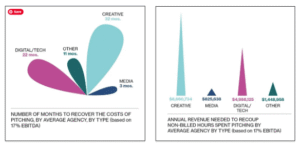
So what are the best presentation skills for creative professionals? There’s no doubt that the most compelling presenters are not those who follow a rigid formula. Instead, the most successful presenters are those who know how to bring their own style, personality, and confidence to the room. Unlocking this confidence allows people to deliver messages with impact, whether that means telling a brand story with conviction, framing insights in a way that resonates, or answering tough questions without losing composure.
Why Generic Training Falls Short

While presentation skills are important in every industry, a one-size-fits-all approach simply doesn’t work in creative and consumer-facing sectors. Generic training often focuses on surface-level techniques: how to structure a slide deck, manage nerves, or keep to time. Useful as these may be, they don’t address the specific pressures of pitching bold ideas, presenting to sceptical clients, or inspiring teams in high-energy environments.
Tailored training acknowledges that no two presenters or industries are the same. By helping individuals refine their natural strengths rather than masking them, it enables presentations that feel genuine, engaging, and ultimately more persuasive and authentic.
Tailored Programs To Build Confidence, Credibility and Impact
At SecondNature, we set the benchmark for business presentation skills training for those in creative industries. The quality, value, and return on investment we deliver are why many of Australia’s leading blue-chip brands and global businesses choose to partner with us. Our clients consistently tell us that our programs have transformed the way their people present, building greater confidence and credibility, and enabling them to deliver messages that are clearer, more compelling, and more impactful.
Our programs are tailored so that they reflect the unique needs of consumer-facing marketing and creative sectors, and also to each individual who participates, so that they develop authentic presentation skills that reflect their unique personality.
Here are some of the outcomes you can expect from our programs that are especially relevant for creative, media, marketing, and FMCG professionals:
- Presenting for Leaders: Participants learn how to develop more inspiring and engaging presentations that both sell the presenter and the message. They leave with an enhanced ability to influence, lead, and motivate others, and they perfect a presentation style aligned with their personality, improving authority and presence.
- Pitch to Win: Helps business development teams to generate more pitch-winning presentations by helping them to define and articulate their most persuasive competitive differentiators, crystallise critical selling messages, and identify their win-themes. It also includes coaching to build presenter confidence, authenticity and credibility.
- Present to Persuade & Influence: Strengthens storytelling techniques, the ability to persuade and influence decisions, and enables presenters to increase their leadership presence and the ability to “own a seat at the table” in senior stakeholder scenarios.
- The 100% Business Presenter: Enables mid-level professionals to communicate clearly and powerfully across in-person, online, and hybrid environments. It also improves message structure, increases confidence, conviction, and authenticity, which in turn leads to stronger presence and credibility in every communication setting.
Why This Matters for L&D Teams in Creative & Consumer-Facing Sectors

These outcomes aren’t abstract. They speak directly to the pressures in creative and consumer-facing industries; the need to pitch bold ideas, persuade stakeholders, deliver emotionally engaging stories, present data in compelling ways, and build trust.
In addition, our extensive post-program support ensures that skills learnt in the workshop transition immediately into real work situations, so reducing the risk of participants reverting to old habits. Many coaching programs falter because there is no reinforcement, so our follow-up support matters – it’s what helps skills stick, which is particularly when people return to high-pressure, fast-paced environments.
Given how important effective communication is in creative and consumer-facing industries, we would argue that communication and presentation skills training is not a nice-to-have. It’s a critical must-have. The right type of tailored training, delivered by the right type of experts, will help drive quicker decision-making, greater stakeholder buy-in, better pitch win-rates, more successful change initiatives, and improve internal and external engagement.
Practical Tips for Presenters in Creative & Consumer-Facing Industries
Even the most experienced professionals can benefit from simple, actionable strategies that elevate their presentations. Here are five tips tailored for those in creative, media, marketing, and FMCG roles:
1. Analyse your audience Different stakeholders have different priorities. Senior executives often just need the headlines and to know the “so what?”, while junior team members may need more context or practical examples. Spend time thinking about who you’re speaking to and tailor your language, examples, and emphasis to resonate with all levels.
2. Harness storytelling to make ideas memorable Data and insights are essential, but people remember stories. Frame your ideas as narratives that illustrate the problem, the solution, and the impact. Stories make your pitch relatable, stick in the minds of your audience, and give creative energy a clear structure.
3. Build credibility and relevance When presenting new ideas to senior audiences, you must make sure that your solutions are actionable and aligned with organisational goals. Senior audiences will also want to know that you’ve looked at all the options and considered all the risks. Finally, you need to be clear about the business impact of any change or new idea. Clearly demonstrating that you’ve thought about things from a senior audience perspective will elevate your credibility and your right to be heard.
4. Prepare for questions and pressure moments Presenting bold ideas often invites tough questions or rapid-fire challenges. Practise responding calmly and confidently. Techniques such as anticipating potential questions, rehearsing answers, and using validating bridging phrases will help you think on your feet without losing composure.
5. Use visuals strategically Strong visuals enhance comprehension and engagement, but cluttered slides can confuse or distract. Use clean, purposeful visuals to highlight key points, simplify complex data, and support your narrative rather than replace it. Every visual should have a clear “job” in telling your story.

Take the Next Step
When it comes to allocating L&D dollars it’s worth considering the unique communication challenges faced by professionals in the creative and consumer-facing industries such as advertising, marketing, media, food, retail, and FMCG. In these sectors where bold ideas need to be sold, campaigns defended, and data turned into compelling stories, the ability to present with confidence and clarity isn’t enough. People need to know the skills to present in a way that builds trust, and persuades, motivates, and inspires audiences. These skills aren’t just a nice-to-have. They’re a competitive advantage.
At SecondNature Australia, we specialise in developing tailored programs that help professionals of all levels become engaging, compelling, authentic communicators; whether they’re pitching to clients, presenting to stakeholders, leading hybrid teams, or just starting out in their careers. Our tailored training programs for marketing professionals are practical, proven, and designed to suit your people, your industry, and your specific goals.
If you want to make confident, successful communication part of your competitive edge, then why not get in touch. Explore SecondNature’s presentation and communication training today
For nearly 20 years, we’ve been known as Australia’s Business Presentation Skills Training Experts, transforming the communication and presentation success of thousands of people in an A-Z of global and local organisations.
View our presentation skills training and coaching reviews to check out what they say about our programs. We have a wide range of customised corporate training solutions, both in-person and online, to choose from, each of which can be tailored to your specific business needs.